
Ok so you’ve waded through the many chemistry tutors available and picked one. Important first step!!!
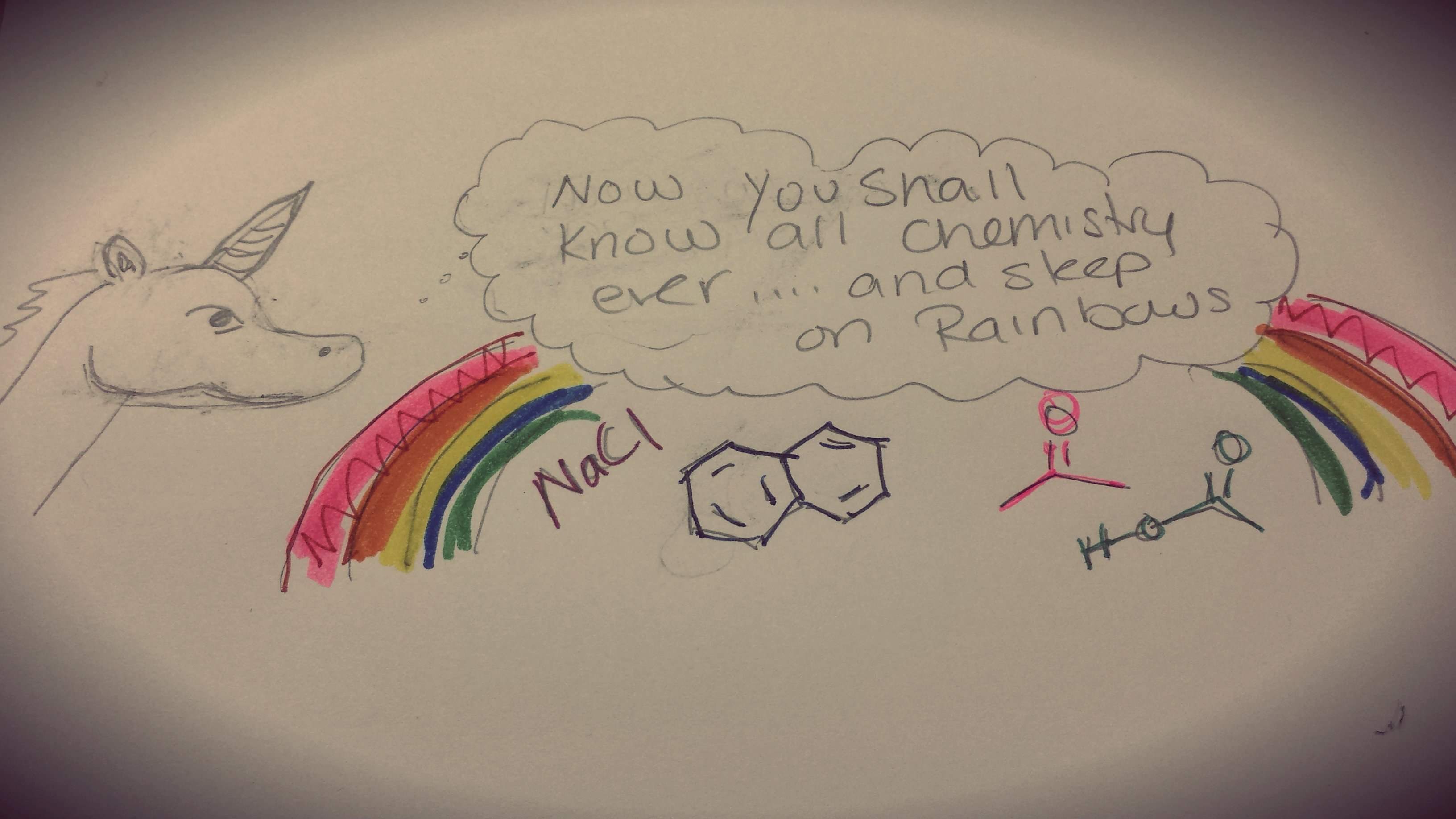
Just remember a tutor is not a magical unicorn that can now grant you automatic knowledge and test-taking abilities. Though it would be AWESOME if we were because …rainbows!!! A tutor is more like the helpful guide in a story or if you’re lucky, they may be like Yoda, except an all-knowing Jedi Master of Chemistry.
Realistically you want to find someone who knows A LOT more than you in the subject and more importantly can translate chemistry into a language you understand. There may be a lot of people out there who know more chemistry than you at the moment but not all will be able to effectively teach you… anything. So choose wisely!
Now you are going to spend your (or your parent’s) hard earned money to pass chemistry because of pre-med, pre-pharm, pre-dent, pre-vet, graduating (they made it a requirement for you to leave with a diploma)! How do you make sure you get the most out of a tutoring experience??? Simple, by being fanatical proactive!
Tips to get the most out of your tutoring session:
- Always review your notes from class before seeing your tutor. This helps not only to find areas you don’t understand but most professors rely heavily on the notes they give you. Chemistry has a lot of reactions and topics and subtopics, since professors can’t possibly cover all of them during class they will choose the ones they find most important for you to know. They will also give you examples of what type of problems they prefer. So know what they want you to know. Simple right?
- Try to do problems on your own first. You MUST do problems !! Reading is great, I 100% endorse reading, but to pass chemistry you must do problems…. lots of them. Learning how to understand the question and then finding the solution is what can make chemistry so much harder than other subjects. No two questions are ever truly exactly alike. So learning how to tackle a problem can be more important anything else when solving chemistry problems.
- Have a plan! Make a list of topics/problems you want to go over during the session. This list will help both you and your tutor organize the time so you cover the most material. Great but what if… lets us say… you don’t know what you don’t know? How will you know what to know? Good question, glad you asked.By doing #1 and #2!!. When you try to do problems, you will QUICKLY see that
life is unfairthere are questions you aren’t getting right and you need help in that topic.

- Communicate (text/ email) the topics/problem list with your tutor so they can be ready!! While tutors may know more than you in chemistry, they aren’t professors (YET!) and even professors get to see their notes before a lecture. Also, send them the problems, or you may spend a few extra minutes while they figure out the right answer. We know more but not everything, give the tutor the opportunity to find extra material that would be helpful!
- Share your notes and get someone else’s if you fell asleep! I tutor for several professors and no two are the same. Whether they learned a cool short-hand when they were taught chemistry or they like certain reagents, all of them are uniquely different. A typical example would be that in organic chemistry while some professors are happy if you write “Acid” on exams, others want you to specify which one acid such as “HCl” Or “H2SO4″(BTW in some reactions it matters!). This could be the difference between a correct answer and a wrong answer or partial points if they are merciful. Your tutor should look at your notes to make sure, they are on the same page as your professor.
Over the years the students that have done the best always seem to follow these steps organically…. heehee… see what I did there??
Ok now go on and pass chemistry!
About the Author
Romina Heymann is finishing her Ph.D. in organic chemistry. She finds teaching to be one of her passions !! It also keeps her coffee addiction happily fed!! Hobbies include writing anything but her thesis and taking photographs of everything.

 Easy Chemistry Tutoring